Nas indústrias de tratamento de água, química, energia e outras, a dureza total da água é um indicador crítico. Uma dureza excessivamente alta tende a causar incrustações nas tubulações, enquanto grandes flutuações na dureza afetam o controle do processo. Embora o método tradicional de titulação manual seja preciso, ele não fornece feedback em tempo real e exige muita mão de obra. Portanto, um número crescente de empresas opta por sensores de dureza total online.
Com tantos produtos disponíveis no mercado, como selecionar um sensor estável, durável e de fácil integração? Considerando...
o sensor de dureza total online ZW-TH-PR
Por exemplo, este artigo explica os pontos-chave para a seleção de sensores.
Por que é necessário o monitoramento online da dureza total?
A dureza total refere-se principalmente à concentração de íons de cálcio e magnésio na água. Os benefícios do monitoramento em tempo real são óbvios:
-
Prevenção de incrustações: Ajuste a dosagem do inibidor de incrustações em caldeiras e permutadores de calor em tempo oportuno.
-
Controle de processos: Nas indústrias alimentícia, de bebidas e farmacêutica, a dureza da água afeta diretamente a qualidade do produto.
-
Alerta precoce: Um aumento repentino na dureza da água permite a detecção rápida de poluição da fonte de água ou vazamentos em equipamentos.
Sensores online podem fornecer dados continuamente e realizar o controle automático quando conectados a um CLP ou computador host.
Princípio do sensor: Método do eletrodo íon-seletivo (ISE)
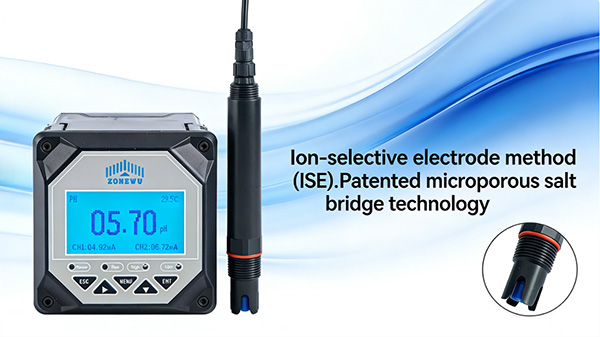
A maioria dos sensores de dureza online adota
o método do eletrodo íon-seletivo (ISE)
O ZW-TH-PR é baseado em um eletrodo seletivo de cálcio-magnésio com membrana de PVC, tendo como núcleo um sistema de referência.
O ZW-TH-PR está equipado com
tecnologia patenteada de ponte salina microporosa
O eletrólito de referência vaza lentamente sob pressão para formar um potencial de junção líquida estável. Comparado com eletrodos comuns, esse design proporciona um sistema de referência mais estável e uma vida útil mais longa para os eletrodos.
Possui também um sensor de temperatura Pt1000 integrado para compensação automática de temperatura, eliminando erros causados por variações sazonais na faixa de 0 a 40 °C.
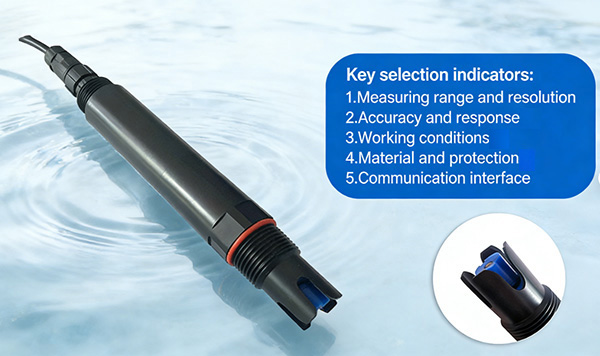
Indicadores-chave de seleção
1. Faixa de medição e resolução
O ZW-TH-PR possui uma faixa de medição de 0 a 1000,0 mg/L (calculado como CaCO₃), uma resolução de 0,1 mg/L e um limite mínimo de detecção de 0,1 mg/L. Essa faixa abrange a maioria das aplicações industriais em água (água potável < 150 mg/L, água de circulação 300 a 800 mg/L). Se a dureza da água no local frequentemente exceder 1000 mg/L, um modelo com faixa de medição mais ampla ou amostragem diluída será necessário.
2. Precisão e Resposta
Precisão: ±10% da leitura; Tempo de resposta (T90): < 60 segundos. Uma precisão de ±10% é suficiente para o monitoramento de tendências do processo, e uma precisão maior pode ser alcançada por meio de comparação e calibração regulares com métodos de laboratório.
3. Condições de Operação
-
Temperatura: 0~40℃
-
Pressão: ≤ 0,2 MPa
-
Faixa de pH: 4~10
Se o pH da água exceder o limite ou contiver íons interferentes em alta concentração (por exemplo, sulfetos, metais pesados), pode ocorrer envenenamento dos eletrodos, exigindo pré-tratamento ou eletrodos especiais.
4. Material e Proteção
O ZW-TH-PR oferece duas opções de materiais para a carcaça:
-
Versão padrão: POM + ABS, custo-benefício excelente, adequada para uso geral em ambientes industriais com água.
-
Versão aprimorada: POM + aço inoxidável 316L, resistente à corrosão, adequado para água do mar ou águas residuais salinas.
Possui grau de proteção IP68 e pode ser imerso para uso prolongado.
5. Interface de comunicação
Configuração padrão: protocolo RS485 + Modbus RTU (taxa de transmissão padrão de 9600, endereço ajustável); saída de 4-20mA opcional. Os valores de dureza e temperatura podem ser lidos em um único comando para facilitar a integração do sistema.
Dicas de instalação e manutenção
-
Ângulo de instalação: O sensor deve ser instalado com uma inclinação (≥15°), sendo estritamente proibida a instalação invertida ou horizontal para evitar a retenção de bolhas.
-
Interface: Rosca NPT de 3/4, compatível com instalação submersa ou em tubulação (célula de fluxo necessária para instalação em tubulação).
-
Primeiro uso: Ative o eletrodo mergulhando-o em água da torneira com a energia ligada por 48 horas e, em seguida, enxágue com água deionizada.
-
Armazenamento a longo prazo: Retire o eletrodo da água, cubra-o com uma tampa protetora e guarde-o em local seco para evitar a desidratação da membrana sensível.
-
Limpeza: Caso se formem depósitos, enxágue a membrana de PVC com água deionizada; evite o contato com óleo de silicone orgânico ou graxa.
-
Calibração: Calibração de dois pontos (ponto zero + inclinação). Pré-calibrado na fábrica, a calibração no local pode ser realizada via comandos Modbus com soluções padrão.
O eletrodo é um consumível com garantia de 6 meses. Substitua-o quando a resposta for lenta ou a calibração falhar.
Resumo da Seleção
Cinco pontos-chave para a seleção de sensores de dureza online:
-
Correspondência de faixa: se abrange a faixa de dureza real.
-
Adaptabilidade operacional: Verificar se o pH, a temperatura e a pressão estão dentro da faixa permitida.
-
Resistência à corrosão: Selecione o material da carcaça de acordo com a corrosividade da água.
-
Compatibilidade de comunicação: se o protocolo é compatível com o sistema existente.
-
Custo de manutenção: Vida útil do eletrodo e frequência de substituição.
O ZW-TH-PR é um produto consolidado na faixa de 0 a 1000 mg/L. Seu sistema de referência patenteado, proteção IP68 e opções de materiais duplos o tornam adequado para a maioria dos cenários industriais. Uma avaliação abrangente baseada nas condições locais é essencial para obter dados de monitoramento estáveis e confiáveis.
https://www.zonewuiot.com/water-quality-sensors_c1